Migrated 74% of a portfolio off manual workflows
The case in 30 seconds
- Problem
- When I joined in early 2023, every Health Assistance case ran through the call centre. Customers could not open or manage a case themselves, and the model could not scale.
- What I did
- Mapped the operation end to end, data flows included: beneficiary verification, eligibility, case creation, mission dispatch, status updates. Designed API contracts for each step. Shipped a self-service portal MVP in 6 months, then expanded it release by release.
- Impact
- From 0% at launch to 74% of the journey digitised today. 32% of cases run end to end digitally, deflecting calls from operations.
How it happened
- Early 2023 · Where it started
No product, no map. Cases lived on the phone. I worked the processes as operations did until the whole chain was mapped, data flows included. Shadowed the operations teams, then built with a small agile team.
- The architecture decision
API contracts first. Every mapped step got a contract: an internal API suite, with an API-first mission-dispatch standard on top. The portal was built on interfaces, not screens bolted to manual work. Finance carried the business case.
- MVP shipped6 months
A deliberately tight zero-to-one build: discovery in the operation, personas, a narrow MVP. It took digitisation from 0% to 25% on selected contracts.
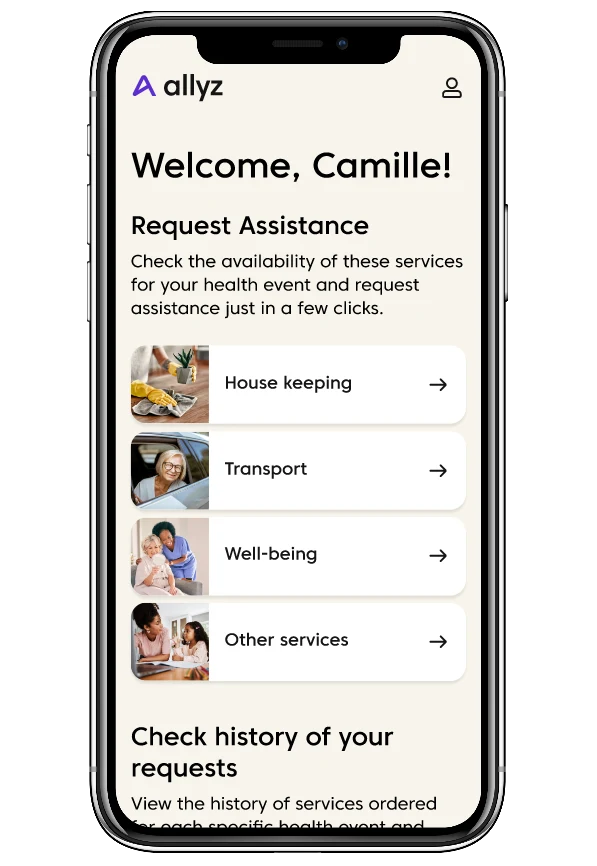
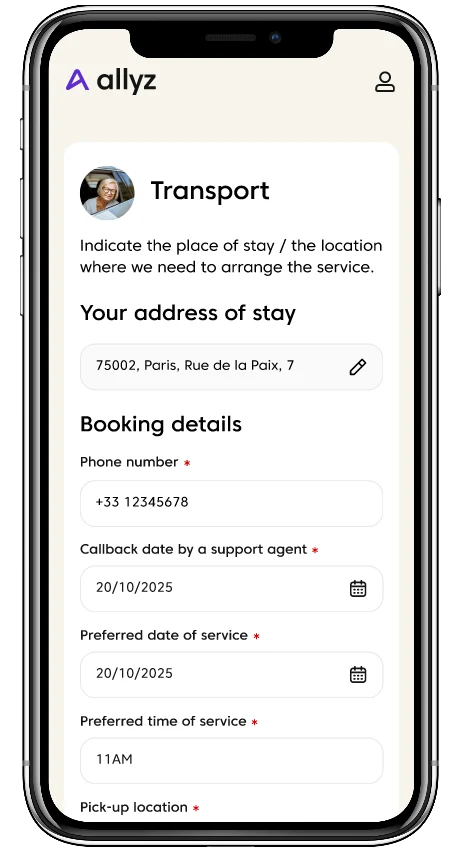
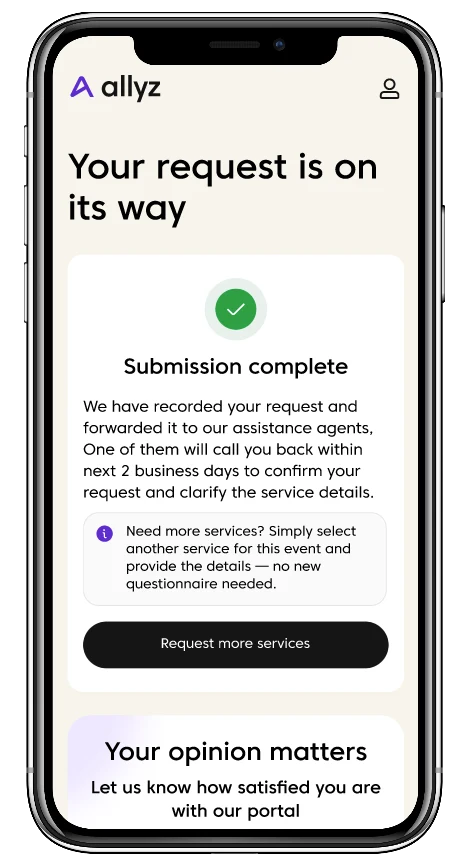
The beneficiary portal: request assistance → booking details → confirmation. - Release by release
Ship narrow, then widen. Each release added steps and contracts; operations shaped every workflow before it was built. The remaining 26% is edge cases and complex update flows. Two measures: share of the journey digitised, and share of cases that never generate a call.
- Today74%of the total journey digitisedHealth Assistance line, from 0% at launch32%of cases run end to end digitallyNo call to operations at any step
What I took from it
Your customer is not always external. Internal APIs for operations teams fund the product work that follows.