Hair diagnosis quiz converted 60% of users into sign-ups
The case in 30 seconds
- Problem
- Kérastase needed rich customer data for its customer relationship management (CRM). Classic sign-up forms offered users nothing in return.
- What I did
- Launched a five-step diagnosis built on a clear value exchange. A personalised routine in two minutes, for an email and a self-declared profile.
- Impact
- 60% of users completed sign-up. Each contact arrived with a full preference profile — first-party data, collected with consent, ready for CRM.
How it happened
- 2019 — Where it started
The brief was more customer data. What a user would trade an email for, and what data was worth capturing, was not settled. Brand and CRM teams set what the data had to support; engineering and design built to a single conversion metric.
- The design decision
Five steps, each earning the next. Concerns are ranked rather than picked, so the profile carries priority and stays usable downstream. The design principle was one metric: consented data collection, not purchase. Every screen either delivered diagnosis value or moved toward the value exchange.
- The diagnosis
The profile captures hair type, concerns ranked by priority, habits, and environment. Users rank up to three concerns, so the first choice carries the most weight. It captures priority, not just preference, which is what makes the data activable downstream.
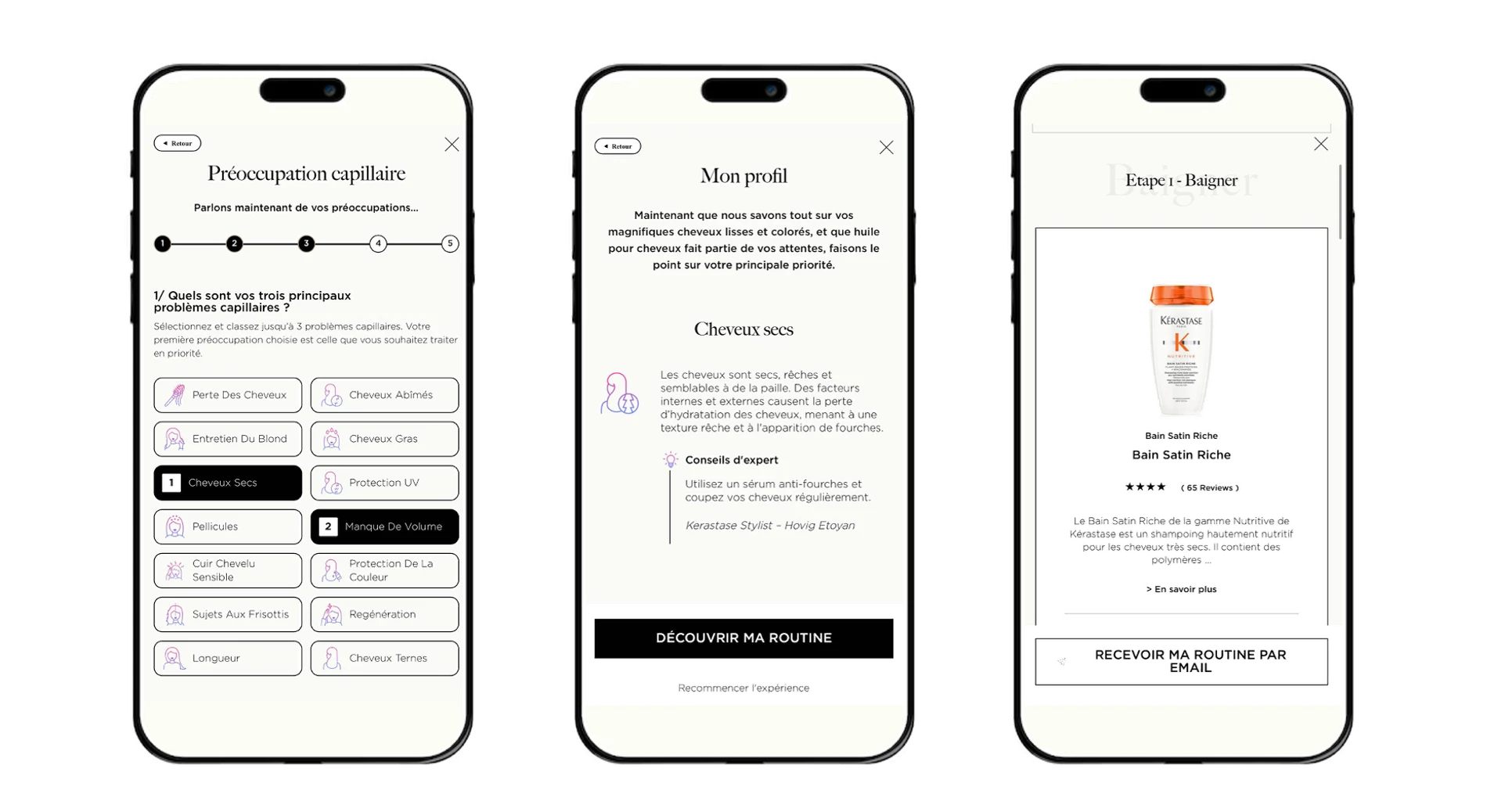
Ranking concerns, the resulting profile, and the routine delivered in exchange for an email. - Adoption
Nothing needed enablement — the diagnosis was the product. It is still live across markets five years after launch, which is the real adoption signal.
- Today60%sign-up conversion from the diagnosisFive-step hair diagnosis, Kérastase5data dimensions captured per profileSelf-declared, collected with consent
What I took from it
The best first-party data is volunteered, not tracked. Give real value at the moment of asking, and consent converts.